Yue Celadon
Overview
Yue Celadon refers to a type of ancient Chinese ceramic known for its distinctive greenish sheen. It is celebrated for its fine craftsmanship and historical significance, originating from the Yue Kiln Sites in Shanglin Lake, located in present-day Cixi, Ningbo, Zhejiang province. The production of Yue celadon began during the Eastern Han Dynasty (25-220) and reached its peak during the Tang (618-907) and Song (960-1279) dynasties. It was renowned for its jade-like features and was primarily produced for the imperial court.
Historical Background
The earliest examples of Yue celadon date back to the Shang Dynasty (c. 16th century-11th century BC), but its production techniques matured significantly during the Eastern Han Dynasty. The celadon was initially produced in the Shanglin Lake area within the Yue prefecture, evolving over centuries to become a coveted form of art and utilitarian ware, appreciated for its aesthetic and practical properties. The technique involved using high-quality clay and precise firing methods to achieve its signature translucent glaze and smooth texture, distinguishing it from other ceramics.
Cultural Significance and Decline
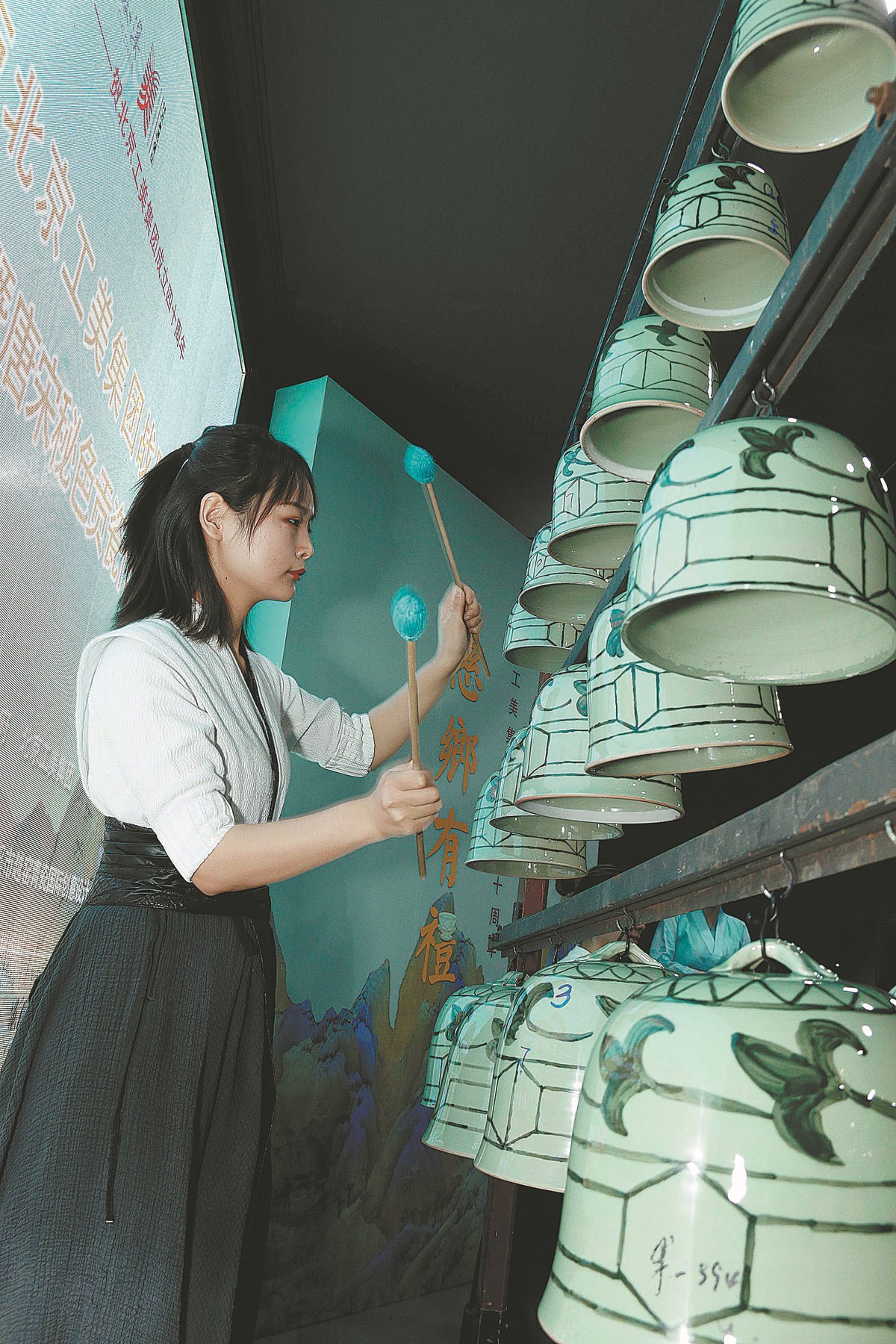
In the Tang Dynasty, Yue celadon gained immense popularity, especially within royal circles. It was used in various musical performances known as "ou yue," where celadon vessels and bowls served as instruments. This art form flourished during the Tang and Song dynasties but saw a decline in production and popularity during the late Song Dynasty. The decline continued over centuries until a resurgence occurred following the archaeological excavations at the Yue Kiln sites at Shanglin Lake in 1998.
Revival and Contemporary Appreciation
The discovery of celadon musical instruments at the Yue Kiln Sites led to renewed interest and efforts to revive Yue Celadon Ou Music. The Cixi Celadon Ou Music Troupe, comprising graduates from prominent music conservatories, has been instrumental in bringing this ancient art form to modern audiences. They perform well-known Chinese musical pieces using celadon vessels, accompanied by traditional instruments like flutes, drums, and bells. Their performances have captivated audiences both domestically and internationally, contributing to the revival of Yue celadon as a cultural heritage.
Production Techniques and Mystique
Yue celadon is distinguished by its grayish shade of green and its tactile, jade-like qualities. The production process involves meticulous techniques, including the creation of saggers—containers used during firing—to prevent contamination and ensure the purity of the glaze. The secretive nature of its production, especially the "mise" celadon or "secret-color" ware, remains a mystery to ceramists and continues to intrigue experts and enthusiasts alike.
Archaeological Discoveries
Significant archaeological discoveries have provided insights into the history and craftsmanship of Yue celadon. In 1987, thirteen pieces of mise celadon were unearthed at the Famen Temple in Baoji, Shaanxi province, revealing the sophistication and allure of this ancient art. The items were hidden in an underground treasure chamber, wrapped in silk, and accompanied by a stone tablet inscribed with "mise ware," confirming their identity as offerings from Tang Dynasty emperors to Buddha.
Yue Kiln sites at Shanglin Lake
The Yue Kiln sites at Shanglin Lake have been pivotal in the history of Yue celadon. These sites served as production centers for over a millennium, contributing significantly to Cixi's identity. The Shanglin Lake Yue Kiln Museum and the archaeological park offer interactive workshops and educational programs to engage the public with the history and culture of celadon. These initiatives aim to preserve and promote the heritage of Yue celadon, ensuring its legacy endures for future generations.
Influence on Porcelain and Ceramics
Yue celadon has profoundly influenced the development of porcelain in China. Its techniques and aesthetics served as a foundation for later innovations and styles, including Longquan celadon and blue-and-white porcelain. The production of celadon and other porcelain wares evolved significantly during subsequent dynasties, with the Yuan Dynasty (1271-1368) bringing new styles to prominence. Article reference1. Music by the bowlful. chinadaily.com.cn. 20242. The sounds of ceramics sing throughout the ages. chinadaily.com.cn. 20203. Porcelain power. chinadaily.com.cn. 2020Photo Gallery(14 pictures)CategoriesCultural HeritageTagChinese CeramicsIntangible Cultural HeritageRelatedOu YueCatalogue1. Overview2. Historical Background3. Cultural Significance and Decline4. Revival and Contemporary Appreciation5. Production Techniques and Mystique6. Archaeological Discoveries7. Yue Kiln sites at Shanglin Lake8. Influence on Porcelain and Ceramics- - - []








